
Root Canal Retreatment in Frisco, TX
At Smile Breeze Dentistry, our dentist will carefully evaluate previously treated teeth using clinical examination and diagnostic imaging to determine whether retreatment may be appropriate. Dr. Shilpa Kelkar will explain what may be causing the problem and whether additional endodontic care, restoration or referral is the best next step.
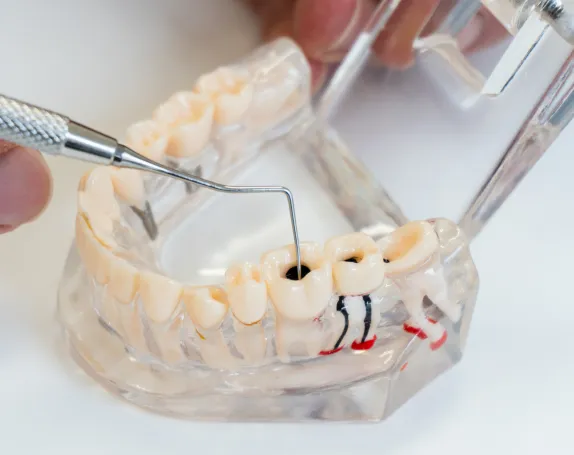
Understanding Root Canal Retreatment
Root canal retreatment may be considered when a tooth that previously received root canal therapy does not heal as expected or develops a new problem.
A previously treated tooth may require reevaluation because of:
- Persistent or returning tooth pain.
- Swelling or tenderness near the treated tooth.
- New decay affecting the tooth or restoration.
- A cracked, loose or damaged crown or filling.
- Complex root anatomy that may not have been fully treated during the original procedure.
- New contamination of the root canal system.
These symptoms do not automatically mean retreatment is necessary. Our dentist will evaluate the tooth, surrounding tissues and existing restoration before recommending the appropriate next step.
When Can a Previously Treated Tooth Be Saved?
The ability to preserve the tooth depends on several factors, including the condition of the roots, remaining tooth structure, existing restoration and surrounding bone.
In some cases, retreatment can provide another opportunity to preserve the natural tooth. In others, Dr. Kelkar may recommend referral for specialty care or discuss another treatment option if the tooth cannot be restored predictably.
What To Expect During Root Canal Retreatment
Root canal retreatment involves reopening a previously treated tooth so the internal canal system can be reevaluated, cleaned and resealed.
- Evaluation and imaging: Dr. Kelkar will examine the tooth and may use digital X-rays or other imaging to assess the roots and surrounding structures.
- Local anesthesia: The treatment area is numbed to help keep you comfortable during the procedure.
- Accessing the tooth: Existing restorative material may need to be removed so the internal canal system can be reached.
- Cleaning and reshaping: Previous filling material is removed from the canals as needed, and the internal spaces are cleaned and shaped again.
- Resealing the canals: The treated canals are refilled and sealed with appropriate endodontic material.
- Restoration planning: Dr. Kelkar will explain whether the tooth needs a new filling, dental crown or another restoration after retreatment.
Potential Benefits of Root Canal Retreatment
When retreatment is appropriate, it may help:
- Address persistent inflammation or infection associated with a previously treated tooth.
- Reduce symptoms such as pain, swelling or tenderness.
- Preserve a natural tooth that might otherwise require extraction.
- Improve the long-term outlook of a tooth affected by new contamination or restorative problems.
- Restore function after the tooth has been properly treated and restored.
The outcome depends on the condition of the tooth, root anatomy, surrounding bone and quality of the final restoration.
A Dentist With Experience in Endodontic Care
Dr. Shilpa Kelkar has practiced dentistry since 2010 and has 16 years of experience with root canal therapy. She has completed approximately 200 root canal cases and has pursued additional advanced endodontic training with Dr. Sonia Chopra in 2025 and 2026.
This experience supports careful case evaluation and treatment planning, including determining when retreatment may be appropriate in-office and when referral for additional specialty care may better serve the patient.
Restoring the Tooth After Retreatment
After retreatment, the tooth usually needs a secure final restoration to protect the remaining tooth structure and restore normal function. Depending on the location and condition of the tooth, Dr. Kelkar may recommend a filling or dental crown. If an existing crown was removed or damaged during treatment, a replacement may be necessary.
Avoid chewing heavily on the treated tooth until Dr. Kelkar confirms that the final restoration is complete and the tooth is ready for normal use.
Schedule an Evaluation for a Previously Treated Tooth
If a tooth that previously received root canal therapy becomes painful, swollen or sensitive again, an evaluation can help determine the cause and whether retreatment may be appropriate.
Schedule an appointment online or call 972-464-1124 to meet with Dr. Shilpa Kelkar and discuss your options.