
Root Canal Therapy in Frisco, TX
Understanding Root Canal Therapy
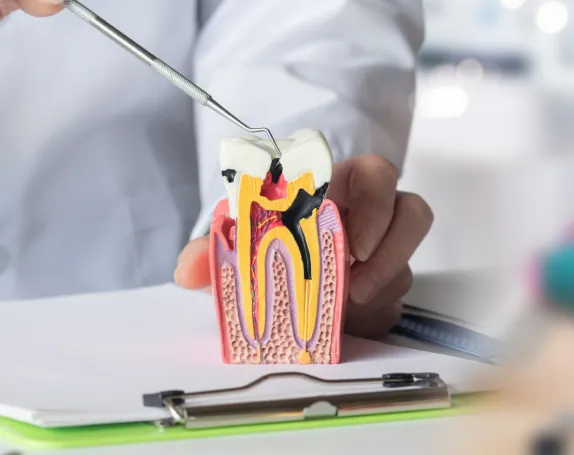
Root canal therapy is an endodontic treatment used when the soft tissue inside a tooth becomes inflamed or infected. This tissue, known as the pulp, contains nerves and blood vessels and can be affected by deep decay, cracks, trauma or repeated dental procedures.
During treatment, Dr. Kelkar removes the damaged pulp, cleans and shapes the inside of the tooth and seals the space to help protect it from further infection.
The goal is to preserve the natural tooth whenever it can be restored predictably.
Signs You May Need a Root Canal
Symptoms that may warrant an evaluation include:
- Persistent or severe tooth pain.
- Lingering sensitivity to hot or cold.
- Pain when biting or chewing.
- Swelling or tenderness near a tooth.
- A pimple-like area on the gums.
- Darkening or discoloration of a tooth.
- A tooth that has been cracked, injured or deeply decayed.
These symptoms can have several causes, so an examination is necessary before determining whether root canal therapy is appropriate.
What To Expect During Root Canal Treatment
Root canal treatment is planned around the condition of your tooth and the extent of the damage or infection.
- Evaluation and imaging: Dr. Kelkar will examine the tooth and may use digital X-rays or other imaging to assess the roots and surrounding bone.
- Local anesthesia: The treatment area is numbed to help keep you comfortable during the procedure.
- Access and cleaning: A small opening is made in the tooth so the damaged pulp can be removed and the root canal system can be cleaned and shaped.
- Sealing the tooth: The cleaned canals are filled with a biocompatible material and sealed to help reduce the risk of reinfection.
- Final restoration: Depending on the tooth, a filling or dental crown may be recommended to restore strength and function.
Benefits of Root Canal Therapy
When appropriate, root canal therapy can help:
- Remove infected or inflamed tissue from inside the tooth.
- Relieve pain related to pulp inflammation or infection.
- Preserve a natural tooth that might otherwise require extraction.
- Restore comfortable biting and chewing after treatment and restoration.
- Protect surrounding tissues from problems related to untreated infection.
The long-term result depends on the condition of the tooth, the quality of the final restoration and ongoing oral care.
Experience With Root Canal Treatment
Dr. Shilpa Kelkar has practiced dentistry since 2010 and has 16 years of experience with root canal therapy. She has completed approximately 200 root canal cases and has pursued additional endodontic education, including advanced training with Dr. Sonia Chopra in 2025 and 2026.
This experience supports careful diagnosis, treatment planning and case selection when determining whether a tooth can be treated in-office or whether referral for additional specialty care may be appropriate.
Restoring the Tooth After a Root Canal
A tooth that has received root canal treatment may need additional restoration afterward to protect it and restore normal function. Depending on the amount of remaining tooth structure, Dr. Kelkar may recommend a filling or dental crown. Back teeth often require more protection because they absorb greater chewing forces.
Our dentist will explain the recommended restoration and when it should be completed.
Schedule an Evaluation for Tooth Pain
If you are experiencing persistent tooth pain, swelling or sensitivity, an evaluation can help determine the cause and whether root canal therapy may be appropriate.
Schedule an appointment online or call 972-464-1124 to meet with Dr. Kelkar and discuss your treatment options.